Tuesday, May 14, 2019

Silenced Lives was hard for me to write but it taught me so much about myself and how it was that the cycle of child sexual abuse harmed so many in my family. Please read Silenced Lives and join me in speaking out in order to protect the next generation of children. join me in vowing No More Victims.

 Silenced Lives:
The Sex Offender’s Legacy

By Janet Mackie
Book Summary                                                                         

Silenced Liives is a  memoir that takes courage to write. Author Janet Mackie shares family stories exposing a pattern of child sexual abuse that surfaced over a hundred years ago on a Nebraska farm, when Mackie’s bullied and abused Great Uncle Andrew was “disappeared” by his brother Paw Paw. The incident is silenced but Andrew’s grieving mother banishes Paw Paw and his devout wife to Black Tower. Once there, Paw Paw bullies and abuses their children, Mackie’s 5-year-old father among them.  Mackie’s angry and resentful father survives to marry, then abuses Mackie and her brothers. 

Powerless to protect, Mackie’s grandmother advises, “Just don’t think about ‘it.’” Mackie, called her mother’s “most stubborn little girl,” blots out her experience and manages to survive childhood only to marry a man “strangely like her father.”

In turn, Mackie’s daughter survives her father’s sexual abuse but also marries a controlling man “strangely like her father.”

Finally freed by her father’s death, Mackie sets out to discover “Why me? Why my family?” Her deftly written, engaging stories illustrate how, over time, abuse can create abuse that cycles forth to harm generations as yet unborn unless we, too, gather courage and speak out. 

Praise for Silenced Lives 

“Janet Mackie has indeed crafted a most compelling read. Her book is, in essence, a family saga, replete with abuse, horror, love, secrecy and regret. She convincingly argues that child sexual abuse can pervade ongoing generations with its destruction unless it is brought out of secrecy, acknowledged and addressed. In a most unique way, she is able to weave the stories of those who have endured sexual abuse at the hands of a family member with those who perpetrated the abuse. In so doing she is able to impart to the reader both understanding and compassion for all involved. This is a profoundly personal and intimate look at a family who has been affected by the cycle of abuse. However, in telling these stories she has provided the reader with a clear picture of what is at stake and how we might move forward so that future generations will not continue to suffer.”
-- Kate Thomas, Ph.D., Director of Clinical Services, The Johns Hopkins Sex and Gender Clinic

More Praise for Silenced Lives 

“Reading like a novel, this book shines a bright light deep into the dark recesses of child sexual exploitation. It also starts to unravel the bewildering inter-generational aspects of this phenomenon.” 
-- Charles M. McGee, Sr. District Judge; Second Judicial District Court, State of Nevada, Washoe County

Silenced Lives is a beautifully written, raw personal account of the transgenerational effects of sexual abuse. Thank you, Janet Mackie, for your courage in sharing your voice to make a difference for others.”
-- Dr. Nancy B. Irwin, PsyD, C.Ht.  


A book like Silenced Lives,...by veteran social worker Janet Mackie, is long overdue. Until now, the public has never had concrete proof that the silent-shame cycle of sexual abuse is responsible for churning out victims, offenders, and enablers generation after generation. Now there can be no doubt. Many “experts” on sexual abuse deny that abuse causes abuse. Perhaps they want to reassure survivors that we are not in danger of becoming “monsters.” And they are right that most survivors do not go on to abuse. Still, a disproportionate number of sex offenders were sexually abused as children. Mackie doesn’t let this seeming paradox distract her from writing about the actual dynamics and facts of inherited abuse. In Silenced Lives, Mackie puts a human face on sex offenders, survivors, and enablers by inviting us into her family’s legacy of “hand-me-down” pain. Mackie was intimately violated by people who were violated by people who were violated by ... and so on. Mackie proves that one generation’s abuse caused the next generation’s abuse when she depicts idiosyncratic similarities of the abuse rituals that were handed down from one perpetrator to the next. Silenced Lives shows sex offenders hiding away in shame—the very shame they act out during their crimes. If they dared seek help, no one would help them anyway since conventional wisdom is, “Once a sex offender, always a sex offender.” They are considered monsters beyond redemption. Meanwhile, the survivors in Silenced Lives get the message that if they were abused, something must be wrong with them. They are told, “We don’t talk about such things.” So, they don’t get the help they need either. Those who suspect or know of abuse don’t want to get tainted by the shame associated with it, so they remain silent. And the secret abuse continues. 

Like Mackie, I was sexually abused as a child. Unlike Mackie, however, I chose to act out the secret shame by perpetrating a sex crime of my own. I don’t blame what I did on what happened to me. I made a choice. However, if I had been able to read Silenced Lives before I let my life get totally out of control, I would have understood the cause of my rape fantasies. Both I and the person I harmed might have escaped the cycle. Better late than never. That’s not what you’ll be saying about the ending of “Silenced Lives,” though. Painful as the family legacy is, Mackie writes so well you’ll want to keep reading even after “the end.” And that’s as it should be, because, as Silenced Lives makes clear, we are a long way from “the end” of the cycle of abuse. 

– Paul Hanley, author of Roller Coaster to Hell and Back: A True Story of Sexual Abuse and New Hope.

Available now on Amazon.com.   


Until I inherited the dusty box of family letters, photos, and memories that form the basis of my memoir Silenced Lives: The Sex Offender’s Legacy, I too thought child molestation was a  personal family tragedy to be quarantined by silence  and shame. I didn't realize that the child sexual abuse that so grievously affected my own family, the abuse that made me angrily assert "This is not the Life I Chose" (and it wasn't) however abuse is not a historic just appearing out of nowhere but can be traced, at least in my family, down 4 generations. Only by speaking out can any of us break the pattern and ensure the safety of generations to come. 


Sunday, January 13, 2019

Blame the Mother: And speaking of friendship: someone who needs friendship... What do you think? There but for the grace of.... Please comment

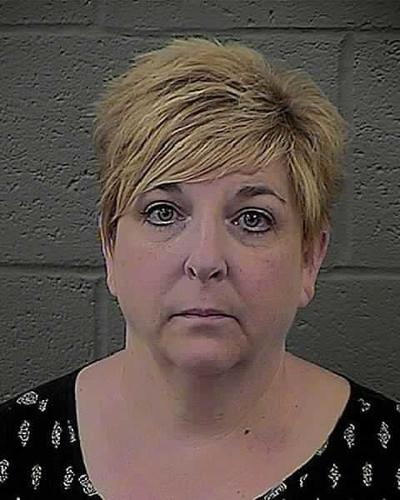
Melinda Maloney, 46, pleaded guilty Wednesday morning to one count of failure to report child abuse, a misdemeanor. As a result of that plea agreement, attorneys from the Ada County Prosecuting Attorney’s Office asked 4th District Court Judge Daniel Steckel to dismiss the other charge Maloney faced, which was destruction of evidence.
Maloney is married to Craig Maloney, 47, a former Meridian veterinarian who in October was sentenced to up to 40 years in prison for the decade-long sexual abuse of his stepdaughter — Melinda Maloney’s biological daughter — from the time the girl was 4 until she was 14.
In the spring of last year, the girl told her mother about the sexual abuse, but Melinda Maloney, despite being a social worker and a mandatory reporter, did not report the abuse, she admitted in court Tuesday. Eight months later the girl told her father, who called the police and initiated the investigation that ended with the arrest of both Craig and Melinda Maloney, who was arrested in September.
When asked why Melinda Maloney did not report the abuse, Katelyn Farley, one of the case’s prosecutors, in court Tuesday said the woman replied she “was going through a custody battle and did not want it to affect her business.”
“That person who was supposed to help (the victim), who was supposed to protect her, did not,” Farley said.
Dennis Benjamin, Melinda’s attorney, pointed out Melinda Maloney forced her husband to move out of the house when she became aware of the abuse.
“She did fail to report it, but she took steps to protect her children,” Benjamin said.
One of the reasons for the plea agreement, the prosecutor told Steckel, was the 14-year-old girl’s reluctance to testify in court against her mother. Instead, prosecutors asked Steckel to sentence Melinda Maloney to 19 days in jail, as well as to pay a $250 fine, with another $250 possible if she does not comply with her unsupervised two-year probation.
Melinda Maloney is also under investigation by the Idaho Board of Social Work Examiners because of her failure to report the abuse.
Tommy Simmons is the Ada County public safety reporter for the Idaho Press. Follow him on Twitter @tsimmonsipt

Nov 7, 2018 - In the spring of last year, the girl told her mother about the sexual abuse, but Melinda Maloney, despite being a social worker and a mandatory ..

Saturday, January 12, 2019

For those of us who are still too afraid to build relationships after the knock on the door, 2019 is time to "unfreeze"? Time to find ways to get started again.? Search the internet, find a team you can play for that does not insist on judging you by the worst thing that happened in your life (and the decisions you have made since then)? Oh, I know, most o those around you (at work or maybe even at Church, perhaps in your neighborhood will continue to be acquaintances you will still hold at arms length because you knw how prejudiced they are however if you can count 3 friends who know the whole truth, who can be there for you even when you need to complain about how the parole officer wrecked your house the last time they came, or tell the truth to about how the real facts of your everyday life...well post here on Not the Life and tell me, tell us all how you went about/ what changes in your thinking made it possible to make friends with that friend.

Dear Mindful Readers,
A new year provides a chance to reflect on the aspects of your life you want to strengthen—and for many of us, that includes checking in on the constellation of relationships we’ve cultivated over the years. Whether it be with your friends, family, coworkers, or partner, here are three ways to build stronger relationships in 2019:

1. Recognize your true friends. Making friends is tough—and a true friend should never be taken for granted. But sometimes, the people you hold close may not be treating you the way you deserve. Explore these six signs of a strong friendship to discover all the ways a friend can enrich your life.

2. Listen to what’s being said. We’ve all caught ourselves tuning out midway through a conversation, either to prepare our response, tackle our mental to-do list, or even *gasp* check a phone notification. But failing to listen to what’s being said deprives our relationships of value and impedes connection. Try these five key mindful listening techniques to give your full attention in the next conversation you have.

3. Know when to forgive. It’s nearly impossible to foster a relationship with someone if you harbor feelings of distrust or uncertainty toward them. While you may not have the ability to forget what’s happened, you always have the power to forgive those who have hurt you. Follow this guided meditation to make amends with both yourself and others.

Here’s hoping you all find moments to enjoy being mindful this week.

With warmest wishes,
The Mindful Team

Tuesday, December 25, 2018

Christmas Greetings, May the New Year be better than the last

I wanted to reach out to those of you who (like me) feel isolated and set apart from your neighbors and even often times from family and friends by the label and condemnation affixed to those related to people in prison or whose names are on the Registry. Did you know there are over 900,000 names on sex offender registries nationwide? So how many wives, children, family members are out here or standing in line at some prison or afraid of being fired if someone vengeful finds out our stubborn connection to a loved one, a family member or to a child harmed by not only by circumstance but by the justice system.

We are not alone. But we have been shamed and silenced and separated from each other. I wanted to post this on Not the Life I chose to let you know I too feel alone and lonely but I know you are out there, you understand, you also are dealing with collateral damage and you are continuing to deal with prejudice, labels, and the fear of being rejected once again. So we spend time searching the internet for blogs like Not the Life, we stand in line, we comfort our children and find strength in eachother.

We are still strong for each other. 

Saturday, October 20, 2018

The most important question is NOT "Do I still love him? (in spite of all this)

This website is a place to share. It's not usual that events on a national stage hit so close to home but I, like many of you, watched Christine Blasey Ford's testimony in front of the Senate Judiciary Committee on national TV. I also watched Brett Kavanaugh's heated denials.

My thoughts were with Kavanaugh's wife. She, like many of us on Not the Life, may have found the whole tears, anger, denial circus sadly familiar. Maybe not. Luckily for her, the committee voted for her husband's version of events. But she must know her husband pretty well (or has come to the conclusion that she doesn't know her husband at all.) In any case she has a long road ahead. 

On the other side of the political spectrum, Hilary Clinton says that, years ago, when  she was forced to decide whether or not to leave Bill Clinton over his infidelities with Monica Lewinski (et. al.) she asked herself what she says is the most important question: "Do I still love him?"

I beg to differ. When faced with this impossible choice, even if we tell ourselves "Yes I still love him" we have to ask ourselves, "Does this person deserve my love?" Is this person now (or willing to become) honest/ trustworthy? Is he into "victim blaming" Does he expect me to follow along lockstep with his version of events in spite of what I know about his proclivities/weaknesses, (perhaps his drinking, his bullying, his other betrayals?)

When we can say "Yes" with a clear conscience to the second question: "Yes,  he worthy of my love?" then, and only then, can we decide the question "Should we stay? Or should we go?" 

And proceed down the long difficult road set before us.

Saturday, September 15, 2018

The man who molested my children died last night He died unrepentant, blaming others, spouting lies. In the end he was trapped in his own denial, unable to find a new path, unable to change even if he'd wanted to. His adamant denial painted him into a corner from which he never dared escape.

He went to meet his maker still attacking those he betrayed, still calling them "liar," still denying harms he'd committed, still denying responsibility for his actions.  His narrative insisted he was the "real" victim pilloried by an "unfair" system. Nothing he had ever done was as bad as what "they" had done to him. His faithful defenders took up his refrain. They attacked and silenced all those who questioned his version blaming everyone but him. They needed to believe his protestations of "innocence" in order to escape the shame and blame that accrues to family members, in order to escape collateral damage.

After all these years, I don't know whether to mourn or celebrate his passing. I feel angry but mostly I feel sad that he saved all his sympathy for himself. He chose to inflict the same harm he once suffered in his childhood, upon his own children who trusted him. Even after his "memorial" service, his betrayals, his denials, continue to divide family members who must fall silent in each other's presence. We "keep the peace" fearing, should we speak out, there will be an attack from across the divide his actions and his denials continue to create. Thus the wounds he inflicted cycle on in this family even after his death. 

For with death, all chance he might someday say, "Sorry" or make difficult amends passes with him. In death, he too lost all opportunity to choose change, grow past his own "bad childhood," gain self-respect, recover and, in the process, put paid to his own trauma and help us all heal from festering wounds he inflicted.

Instead, with his ever-shifting denials, he unwittingly painted himself into a corner from which he couldn't escape.  His poor-me stories gathered a group of staunch believers/ intrepid defenders.  In his defense, they ruthlessly and self-righteously went on the attack. Even had he wanted to speak the truth, acknowledge harms done, change, recover, he dared not. After all, he'd lied to his defender's too. In doing so he betrayed their trust just as he'd betrayed the trust of the children who once trusted him not to take sexual advantage of their vulnerability. They wouldn't take kindly to knowing his stories had made fools of them, his lies had betrayed them too. How could they avoid shame and blame after defending him to the bitter end?

Thus, he'd glued himself in place. He had to stick by his lies if, for no other reason to continue in the good graces "protectors." prevent them from turning on him. He couldn't tell the truth, couldn't grow, couldn't experience a change of heart or reach out to make amends to victims.  So bought into their own role as "blameless defenders" his "saviors." If he admitted the truth, showed remorse, changed with age, they'd have been forced to see themselves differently also. What if in their quest to be seen as blameless in front of the neighbors, they abandoned him?

So, for whatever reason, he never admitted to truths necessary to seek change. Even after his death, his lies live on, assume a toxic afterlife. Family members still take sides, attack each other across the divide. His "saviors" repeat his version: He's their martyr.  Others, struggle on, "keeping the Peace," with their own truth still trapped, silenced by fear of more attacks. 

Should silence cease and truth rear it's ugly head, what would become of family then?

He's gone but t's not over. Why not take the easy way? Why not tiptoe off in silence now that he's dead?   Why speak up now?  Why post this blog on Not the Life?

Because this is not the Life I thought I was choosing when we two married. Because this family is drifting furth and further apart in the Silence.  What about the next generation of my family? He harmed his children in the same ways he was harmed as a child.  Even in death, the silenced legacy of sexual abuse cycles on in this family. Lies fester. 

Overcoming fear, speaking out, reaching out, matters because, (as I have learned on Not the Life,) sharing the truth has power to heal us all regardless which 'side' we're on. Speaking out means we have an opportunity to discover the 3rd path, find healing, find a restorative justice.  Staying silent only extends the harms done.

Perhaps if my Ex had dared admit the truth sooner, perhaps restorative justice might have restored him as well as the separated parts of this family. It might have offered him a path back and given him a real opportunity to exit the "corner' he'd painted himself (and this family.) He might have made a  new life before death took away his opportunity for change.

Did females in his family insist upon his claim of "innocence" because in their heart of hearts they believed "Once a sex offender, always a sex offender"?  Did they stifle the truth, attack his victims, because they believed no one "like that"could ever change? If so,  he kept up the charade and drank himself to death instead. 

I wonder how many more families, quick to spring to the defense of a loved one after the police knocked on the door, fail to see that in their adamant defense of his "innocence,' they require their loved to stay stuck in denial for the rest of his life their sakes as much as for his?

 Take care, Janet Mackie


Saturday, August 11, 2018

Ever wonder How mob violence and 'COLLATERAL DAMAGE' "just happens?" Wonder why adding the indelible label "Rapist" to Mexican, triggers mob prejudice and justifies violence against all of us.


Google "How Evil Happens" by Noga Arikha for the 
brain science answer to Why even family attacks us 
if we choose to stay after the Knock on the door...
It also may explain why recidivism is very low/ almost 
non-existent once our loved one (finally) released from
prison. It's a long (sort of 'technical) read' but if 
I understand what the article is telling us all, being bullied and coerced is what ultimately 
causes neurological change and has bad consequences) 
down the road for us all. 

It also might help to explain the mob mentality exhibited at
the 'show trial' of Larry Nasser.  

And why my father was so obsessed with becoming a 
man just like his father, that he forgot to care about the 
damage he was inflicting and abused us just as his 
father abused him as a child...


https://aeon.co/essays/is-neuroscience-getting-closer-to-explaining-evil-behaviour;